Lacertidae
Diverse family of wall lizards native to Afro-Eurasia.

Wikipedia / Wikimedia Commons
The Lacertidae family includes wall lizards, true lizards, or simply lacertas, and these reptiles are native to Afro-Eurasia. With roughly 360 species spread across 39 genera, they are the most common group of reptiles in Europe.
In Europe and around the Mediterranean, lacertids typically live in forests and scrublands. In Asia, species from the genera *Eremias* and *Ophisops* take over in grasslands and deserts. African species tend to favor rocky, dry areas. Only a few lacertids, like the two *Holaspis* species (*Holaspis guentheri* and *Holaspis laevis*), are arboreal; they can glide—though not very well—by using their broad tails and flattened bodies as airfoils.
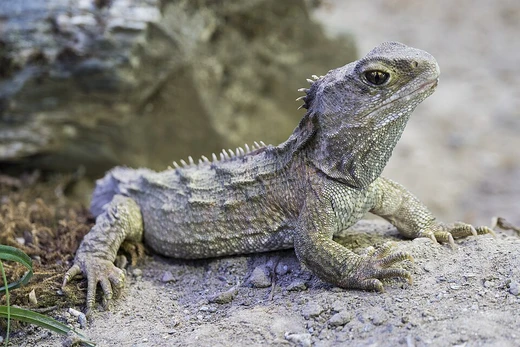
These lizards are small to medium-sized. Most are under 9 centimeters long, not counting the tail. The largest living species, *Gallotia stehlini*, reaches 46 centimeters, and some extinct forms were even bigger. They mostly eat insects, with one exception: *Meroles anchietae*. Some individuals of this species eat mainly arthropods and plants, while others in the Namib Desert specialize in seeds. Lacertids have similar body shapes—slender with long tails—but their patterns and colors vary widely, even within a single species. Their head scales are large and often contain bony plates (osteoderms), back scales are small and granular, and belly scales are rectangular. Most species show sexual dimorphism, meaning males and females have different patterns. At least eight species from the Caucasus are parthenogenetic (reproducing without males), and three species give birth to live young, including the viviparous lizard *Zootoca vivipara*.
Lacertids likely originated in Europe, based on their earliest fossils found there, along with those of their extinct sister group, the Eolacertidae. Possible lacertid fossils come from the Paleocene of France and Belgium. The oldest definite lacertid is from the early Eocene (Ypresian) in Mutigny, France, in the Paris Basin. They spread into Asia by the early Oligocene. When they reached Africa is uncertain, with estimates ranging from the Eocene to the Miocene.
The classification below follows Arnold et al., 2007, based on their phylogenetic analysis.
Family Lacertidae Subfamily Gallotiinae - *Gallotia* (8 species) - *Psammodromus* (8 species) Subfamily Lacertinae Tribe Eremiadini - *Acanthodactylus* (45 species) - *Adolfus* (6 species) - *Aus
- Number of species
- ~360
- Number of genera
- 39
- Largest living species
- Gallotia stehlini (46 cm)
- Typical size
- Most species less than 9 cm (excluding tail)
- Primary diet
- Insectivorous (with exceptions)
- Distribution
- Afro-Eurasia
- Dominant reptile group in
- Europe
Lore & Background
Lacertids are small to medium-sized lizards, with most species under 9 cm long excluding the tail. The largest living species, Gallotia stehlini, reaches 46 cm, and some extinct forms were larger. They are primarily insectivorous, though Meroles anchietae shows individual variation, with some eating arthropods and plant matter while others specialize in seeds in the Namib Desert. Their bodies are slender with long tails, and they have highly varied patterns and colors, even within the same species. Scales are large on the head (often with osteoderms), small and granular on the back, and rectangular on the underside. Most species are sexually dimorphic.
European and Mediterranean lacertids live mainly in forest and scrub habitats. In Asia, Eremias and Ophisops species replace them in grassland and desert habitats. African species usually inhabit rocky, arid areas. Holaspis species are among the few arboreal lacertids, and its two species, Holaspis guentheri and Holaspis laevis, are gliders (though apparently poor ones), using their broad tail and flattened body as an aerofoil. At least eight species from the Caucasus are parthenogenetic, and three species give birth to live young, including the viviparous lizard, Zootoca vivipara.
Lacertids are suspected to have originated in Europe, based on their earliest fossils found there alongside those of their sister group, the extinct Eolacertidae. Fossils possibly attributable to lacertids are known from the Paleocene of France and Belgium. The oldest definitive lacertid is from the early Eocene (Ypresian) in Mutigny, France. They dispersed into Asia by the early Oligocene, and the timing of colonization of Africa is uncertain, ranging from the Eocene to the Miocene.
Reader's Guide
The Lacertidae are a key group for understanding reptile evolution and biogeography in Afro-Eurasia. As the dominant reptiles in Europe, they provide insight into the continent's herpetofauna. Their fossil record, with the oldest definitive specimen from the early Eocene of France, suggests a European origin, and their dispersal into Asia by the early Oligocene and uncertain colonization of Africa highlight complex historical migration patterns. The family's diversity—about 360 species in 39 genera—and varied adaptations, such as the gliding Holaspis species and the seed-specializing Meroles anchietae, illustrate ecological versatility. The presence of parthenogenetic species in the Caucasus and viviparous species like Zootoca vivipara adds to their biological interest. The classification by Arnold et al. (2007) and the phylogenetic tree by Baeckens et al. (2015) provide frameworks for ongoing research. Extinct genera from the Eocene to Pliocene, such as Succinilacerta from Baltic amber, further enrich the evolutionary narrative. Lacertids remain a valuable model for studies in evolution, ecology, and conservation.
Did You Know?
- The largest living lacertid species, Gallotia stehlini, reaches 46 cm in length.
- Holaspis guentheri and Holaspis laevis are gliders, using their broad tail and flattened body as an aerofoil.
- At least eight species from the Caucasus are parthenogenetic.
- The oldest definitive lacertid fossil is from the early Eocene (Ypresian) in Mutigny, France.
Frequently Asked Questions
Who is Lacertidae?
Lacertidae is a large family of roughly 360 lizard species spread across 39 genera, commonly known as wall lizards or simply lacertas. They are native to Afro-Eurasia and represent the most widespread group of reptiles in Europe.
What are Lacertidae's powers/role?
Most members are small, insect-eating lizards under 9 cm of body length (tail excluded), though the Canarian giant wall lizard, Gallotia stehlini, stretches to about 46 cm. A rare few, such as the two Holaspis species, climb into trees and can even glide short distances.
Where does Lacertidae live?
Across Europe and the Mediterranean basin they are typically found in forests and scrubland habitats. In Asia, genera like Eremias and Ophisops shift into grasslands and deserts, while African species gravitate toward rocky, dry terrain.
Why is Lacertidae important?
As the dominant reptile family in Europe, lacertids serve as key insectivorous predators that help regulate arthropod populations in their ecosystems. Their presence across three continents makes them a major thread in Afro-Eurasian terrestrial food webs.
What is the biggest member of the Lacertidae family?
The title goes to Gallotia stehlini, the Canarian giant wall lizard, which reaches approximately 46 cm in total length. Every other species in the family is considerably smaller, with most staying under 9 cm of body length not counting the tail.
More in Extant Reptiles & Amphibians 1-22
Spotted an error? Know more?
This is a living reference — every entry is fact-audited, and reader corrections feed straight into our audit queue. Suggest an edit · See this site's audit record