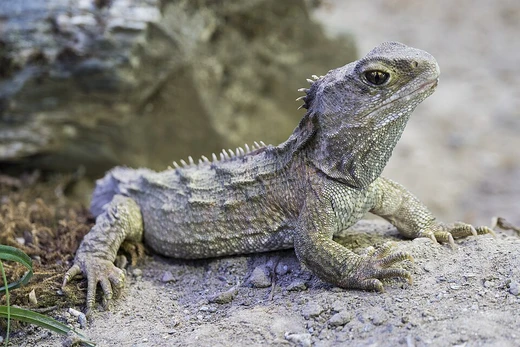
Lacerta (genus)
Genus of lizards in the family Lacertidae, split into nine genera in 2007.

Wikipedia / Wikimedia Commons
Lacerta is a genus of lizards within the family Lacertidae. The genus originally included roughly 40 species, but in 2007, Arnold, Arribas, and Carranza divided it into nine separate genera. The earliest known fossils of Lacerta date to the early Miocene epoch and are anatomically identical to modern green lizards like Lacerta viridis. Some fossil species from the Mediterranean region during the ice age, such as Lacerta siculimelitensis, grew to notably large sizes. The genus currently includes the species listed below, while many former members—such as the Anatolian rock lizard, the ocellated lizard, and the common wall lizard—are now placed in other genera.
- field
- Herpetology
- known_for
- Type genus of the family Lacertidae; historically diverse genus of lizards
- earliest_fossil_epoch
- Early Miocene
- former_species_count
- Around 40
Lore & Background
The genus Lacerta was established by Linnaeus in 1758 in his Systema naturae. It originally encompassed a wide range of lizard species, but taxonomic revisions have since reclassified many of them. The earliest known members of the genus are from early Miocene epoch fossils, which are anatomically indistinguishable from modern green lizards such as Lacerta viridis. Some fossil species from the ice-age Mediterranean, such as Lacerta siculimelitensis, reached especially large sizes.
Reader's Guide
Lacerta serves as the type genus for the family Lacertidae and historically included around 40 species. Its significance lies in its role as a foundational taxon in herpetology, though its composition was dramatically revised in 2007 when Arnold, Arribas & Carranza split it into nine genera. This reclassification reflects ongoing refinement in lizard systematics. The genus's fossil record extends to the early Miocene, with some ice-age Mediterranean species attaining notably large sizes. Today, the genus contains a reduced set of species, while many former members—such as Podarcis muralis, Zootoca vivipara, and Timon lepidus—are now placed in other genera. The 2007 revision highlights the dynamic nature of taxonomic classification and the importance of anatomical and genetic studies in understanding lizard evolution.
Did You Know?
- Lacerta was split into nine genera in 2007 by Arnold, Arribas & Carranza.
- The earliest known members of Lacerta are from early Miocene epoch fossils.
- Some fossil species from the ice-age Mediterranean, such as Lacerta siculimelitensis, reached especially large sizes.
- Former species include Podarcis muralis (common wall lizard) and Zootoca vivipara (viviparous lizard).
Frequently Asked Questions
What is Lacerta (genus)?
Lacerta is a genus of lizards belonging to the family Lacertidae and serves as the type genus for that entire family. It is best known for species like the common green lizard, Lacerta viridis, found across parts of Europe and North Africa.
How many species does Lacerta contain today?
The genus once housed roughly 40 species, but a 2007 taxonomic revision by Arnold, Arribas, and Carranza reorganized it into nine separate genera. Only a subset of those original species remains under the Lacerta name today.
How old are the earliest known Lacerta fossils?
The oldest identified fossils attributed to Lacerta come from the early Miocene epoch, and their anatomy matches that of modern green lizards almost exactly. This suggests the genus has maintained a remarkably stable body plan for millions of years.
Why was Lacerta split into nine genera in 2007?
Genetic and morphological analyses by Arnold, Arribas, and Carranza revealed that the original 40-species grouping was too broad and lumped together lineages that had diverged significantly. The revision separated those lineages into nine distinct genera to better reflect their evolutionary relationships.
Were any ancient Lacerta species unusually large?
Yes—fossil species from the Mediterranean during the ice age, such as Lacerta siculimelitensis, reached notably larger body sizes than any living member of the genus. These giants represent an interesting contrast to the small-to-medium lizards we see in the genus today.
More in Extant Reptiles & Amphibians 1-22
Spotted an error? Know more?
This is a living reference — every entry is fact-audited, and reader corrections feed straight into our audit queue. Suggest an edit · See this site's audit record